

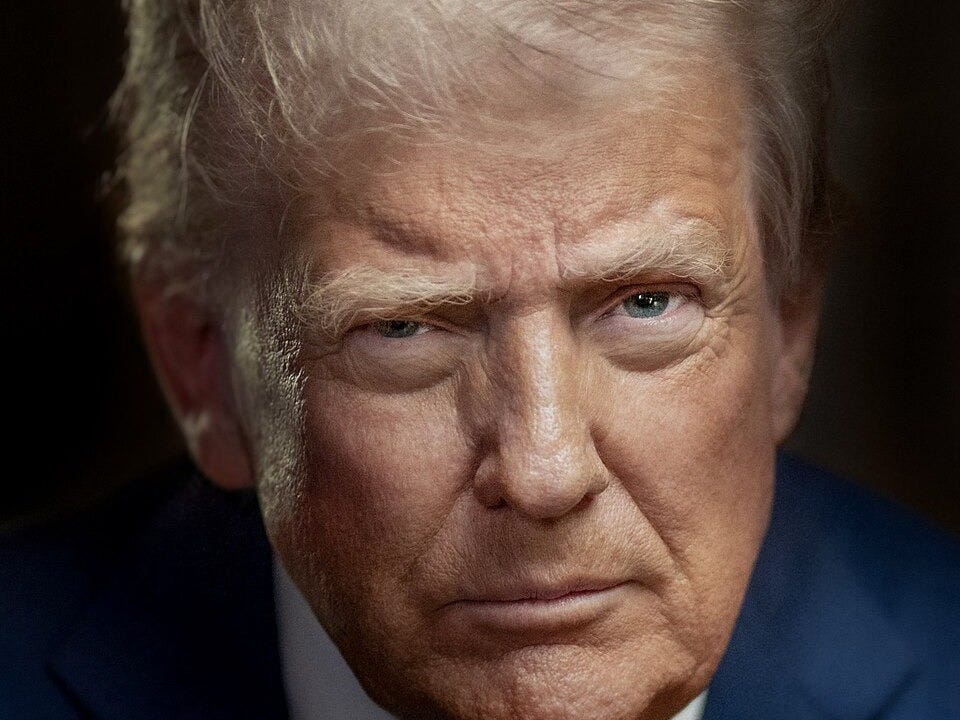

Only one Republican Congress member has signed on to any of the three bills so far.
What the legislation does
Three Democratic bills in Congress would block President Donald Trump’s so-called “Anti-Weaponization Fund.” The money could be used to pay out everyone from January 6 participants, Trump allies, family members, and maybe even Trump himself.
Rep. Jamie Raskin (D-MD8) introduced the No Taxpayer-Funded Settlement Slush Funds Act. This is by far the biggest of the three pieces of legislation, attracting 80 House cosponsors so far, all Democrats.
Sens. Mark Kelly (D-AZ), Adam Schiff (D-CA) and Elissa Slotkin (D-MI) – all Democrats – introduced the Drain the Slush Fund Act.
Reps. Brian Fitzpatrick (R-PA1) and Tom Suozzi (D-NY3) introduced the Bipartisan Transparency for American Taxpayers Act. So far, Rep. Fitzpatrick is the only Republican to sign on to any of these three bills.
Context
In 2020, IRS employee Charles Littlejohn leaked Trump’s tax returns to reporters, notably the New York Times. Littlejohn pleaded guilty and was sentenced to five years in prison. In January 2026, Trump sued the IRS for $10 billion – even though the action was taken by one rogue employee acting illegally, rather than by “the IRS” itself.
In May, Trump and the IRS reached a settlement: Trump would drop the lawsuit, in exchange for which a so-called “Anti-Weaponization Fund” would be created to pay people who Trump’s Justice Department considered victims of illegal government prosecutions – presumably under the Biden administration.
The money could potentially be awarded to January 6 participants, Trump allies like Steve Bannon and Roger Stone, Trump family members, and maybe even to Trump himself.
The pool of money would total $1.776 billion, a clear reference to the Declaration of Independence, signed in the year 1776. Although some media outlets, not wanting to give that exact dollar amount any oxygen, rounded and referred to the fund as “nearly $1.8 billion.”
The fund would also only operate through December 2028, scheduled to be the last full month of Trump’s term. So it couldn’t be used by any future president, whether Republican or Democratic.
Then the Wall Street Journal reported that more than a dozen Republican senators had privately expressed opposition about the fund to the White House. In response to controversy and backlash, Acting Attorney General Todd Blanche suspended the fund.
However, President Trump himself says he “doesn’t know” if the fund is permanently ended, or just paused. About the possibility of the fund’s resurrection, Trump replied: “I love it.”
What supporters say
Obviously, Democratic supporters argue that the fund is corrupt and self-dealing. Yet even some congressional Republicans publicly spoke up against it, too.
Sen. Mitch McConnell (R-KY) called it “utterly stupid and morally wrong.” “A fund that is set up to compensate people who assaulted Capitol Police officers,” Sen. Thom Tillis (R-NC) said. “How absurd does that sound coming out of my mouth?”
“Yesterday I called on the DOJ to explain where this money is coming from, who may receive it, and under what authority this fund was created. Today, we are acting,” Rep. Fitzpatrick, the only Republican cosponsor of any of the three above bills, said in a May 21 press release. “Taxpayer dollars will not become a discretionary payout fund.”
What opponents say
Opponents counter that the fund is necessary to counteract so-called Democratic “lawfare,” or using the legal system and government to go after one’s political enemies.
“The machinery of government should never be weaponized against any American, and it is this Department’s intention to make right the wrongs that were previously done while ensuring this never happens again,” Acting AG Blanche said in the press release announcing the fund. “As part of this settlement, we are setting up a lawful process for victims of lawfare and weaponization to be heard and seek redress.”
Trump, for what it’s worth, portrayed the fund as an act of selflessness, seemingly countering claims that he himself could receive some of the funds.
“I gave up a lot of money in allowing the just announced Anti-Weaponization Fund to go forward. I could have settled my case, including the illegal release of my Tax Returns and the equally illegal BREAK IN of Mar-a-Lago, for an absolute fortune,” President Trump posted on Truth Social. “Instead, I am helping others, who were so badly abused by an evil, corrupt, and weaponized Biden Administration, receive, at long last, JUSTICE!
The Senate votes
The Senate voted down two attempts to attach similar policies as amendments to a larger bill funding ICE (Immigration and Customs Enforcement) and the Border Patrol.
One amendment would have almost entirely blocked the fund, except for payments to January 6 law enforcement, rather than January 6 participants. The amendment attracted majority support, in a 52 to 47 vote, but that fell short of the three-fifths vote required.
Six Republican senators voted in favor:
Another amendment would have diverted the fund’s money to fraud enforcement, but that was overwhelmingly defeated by both parties, in a 15 to 84 vote. Only 12 Republicans and three Democrats voted in favor, with opponents calling it “a slush fund by another name.”
As for the three pieces of standalone legislation, odds of passage are low in the Republican-controlled Congress. They’ve all been referred to the House or Senate Judiciary Committee, respectively.